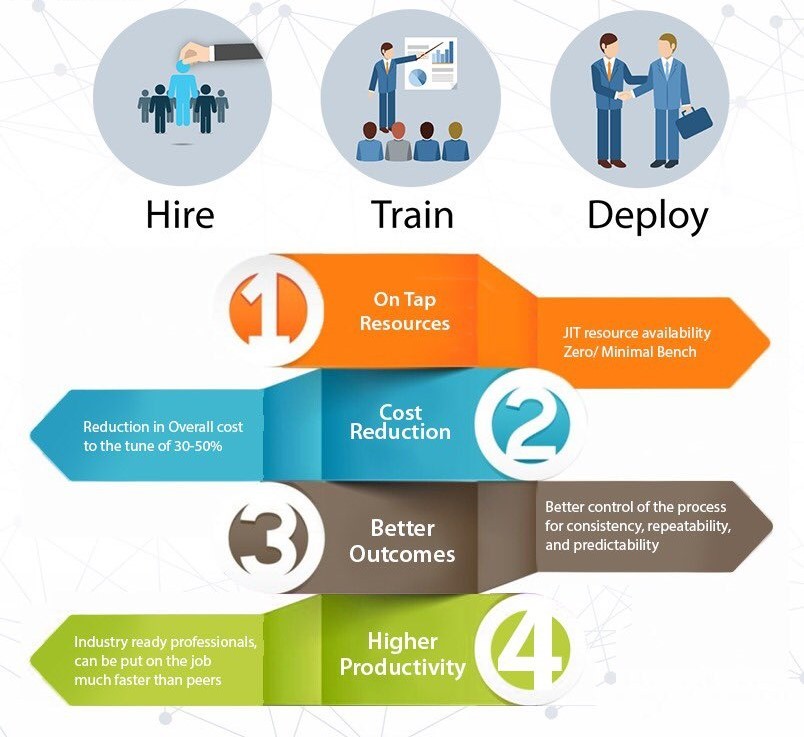

What is the Hire-Train-Deploy (HTD) Program?

The Hire-Train-Deploy (HTD) Program is a strategic workforce development initiative under the Chools Operating Model. It is designed to bridge the gap between industry demands and workforce skills by providing structured training for individuals, ensuring they are job-ready before placement in companies. This program benefits both employers and candidates by reducing recruitment time, minimizing skill gaps, and enhancing productivity.The HTD model is highly effective because it ensures that candidates receive targeted, industry-relevant training before they enter the workforce. This not only enhances their employability but also provides companies with a pre-screened, well-prepared talent pool that requires minimal onboarding. The structured nature of the program ensures a smooth transition from learning to working, benefiting all stakeholders involved.
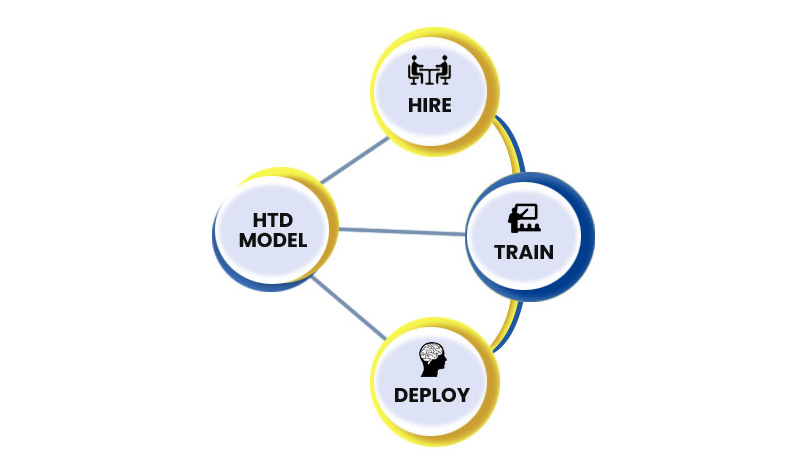


Objectives of the HTD Program:


What Certifications Are Awarded in the HTD Program?

Participants receive industry-recognized certifications that validate their proficiency in various domains. These certifications enhance employability and career growth opportunities. Certification programs play a crucial role in establishing credibility and showcasing expertise to potential employers.

Technology & IT Certifications:

  • Software Development & Engineering

  • Cloud Computing & Cybersecurity

  • Data Analytics & Business Intelligence

  • Artificial Intelligence & Machine Learning

  • DevOps & Automation

  • Network Administration & Security

Business Management Certifications:


  • Six Sigma & Lean Methodologies

  • Project Management (PMP, Agile, Scrum)

  • Financial Analysis & Business Process Optimization

  • Digital Marketing & Customer Relationship Management (CRM)

  • Business Intelligence & Strategy

  • Supply Chain Management

Benefits of Certification:


  • Enhances employability and professional credibility.

  • Validates skills with globally accepted standards.

  • Increases earning potential and career growth opportunities.

  • Opens doors to diverse job roles across industries.

  • Provides proof of expertise in specialized areas, increasing candidate desirability.

Why is the HTD Program Essential for Skill Development?

With rapid technological advancements and evolving business landscapes, the workforce must be equipped with current and relevant skills. The HTD program ensures structured training and upskilling opportunities to meet industry needs. Many industries are facing an acute shortage of skilled professionals, making HTD programs a necessity for both job seekers and employers.

Key Reasons for HTD in Skill Development:


  1. Bridging the Skill Gap: Ensures that employees possess the necessary competencies required in the modern workplace.

  2. Reducing Hiring Risks: Employers benefit from a pre-trained workforce, lowering attrition and increasing productivity.

  3. Enhancing Career Readiness: Participants are equipped with industry-specific knowledge, making them immediately employable.

  4. Ensuring Market Relevance: The training modules are regularly updated to reflect the latest industry standards and technologies.

  5. Facilitating Smooth Workforce Entry: Fresh graduates and career transitioners gain hands-on experience, making them job-ready.

How is the HTD Program Implemented by Chools?


RamaqChools follows a structured four-phase approach in implementing the HTD model. Each phase is carefully designed to optimize the learning and hiring process for candidates and employers alike.


Phase 1: Talent Identification & Hiring
  • Screening and selecting candidates based on aptitude, industry needs, and potential for growth.

  • Conducting assessments and interviews to ensure alignment with employer requirements.

  • Identifying skill gaps and areas of improvement to provide tailored training.


Phase 3: Certification & Evaluation
  • Assessment through exams, live projects, and performance reviews.

  • Issuance of industry-recognized certifications upon successful completion.

  • Regular feedback sessions and skill assessments to track progress.
Phase 2: Training & Skill Development
  • Intensive training sessions on technical skills, soft skills, and domain knowledge.

  • Use of case studies, hands-on projects, and mentorship programs.

  • Collaboration with industry experts and corporate trainers to provide real-world insights.

  • Simulation-based learning to develop problem-solving and critical-thinking skills.
Phase 4: Job Deployment & Career Support
  • Placement of candidates in full-time roles within partner organizations.

  • Ongoing career support through mentorship, networking, and skill enhancement workshops.

  • Career counseling and professional guidance for long-term growth.

  • Alumni networking opportunities to foster professional connections.

HTD Program - Case Study

What Are the Benefits of the HTD Program?


For Candidates:
  • Guaranteed Job Placement: Employment opportunities post-training.

  • Financially Accessible: Minimal or no upfront training cost.

  • Industry-Recognized Certification: Enhances career prospects.

  • Hands-On Learning: Real-world problem-solving and projects.

  • Professional Networking: Opportunities to connect with industry professionals.

  • Job Stability: Increased chances of long-term career success.
For Employers:
  • Pre-Skilled Workforce: Reduces training and onboarding time.

  • Lower Hiring Costs: Eliminates the need for extensive recruitment efforts.

  • Reduced Attrition Rates: Candidates trained through HTD programs tend to stay longer in their roles.

  • Custom-Trained Talent: Employees trained specifically for company needs.

  • Improved Productivity: Skilled employees contribute to higher efficiency and innovation.

What is the Structure of the HTD Program?


  • Pre-Screening & Selection: Identifying potential candidates through aptitude tests and interviews.

  • Industry-Specific Training: Technical & business skills training based on employer requirements.

  • Project-Based Learning: Hands-on experience through live projects and industry case studies.

  • Deployment & Career Support: Candidates are placed in full-time roles with partner organizations, with continued mentorship and learning opportunities.

What Are the Main Topics Covered in the HTD Program?

The curriculum is designed to provide a holistic learning experience. Key topics include:

  1. Technical & IT Skills:
    • Software development (Python, Java, .NET, etc.)

    • Cloud computing and cybersecurity fundamentals

    • Data analytics, SQL, and machine learning

  2. Business & Management Skills:
    • Project management and business process optimization

    • Financial modeling and risk management

    • Digital marketing and CRM solutions

  3. Soft Skills & Workplace Readiness:
    • Effective communication and leadership training

    • Critical thinking and problem-solving

    • Business etiquette and professional ethics